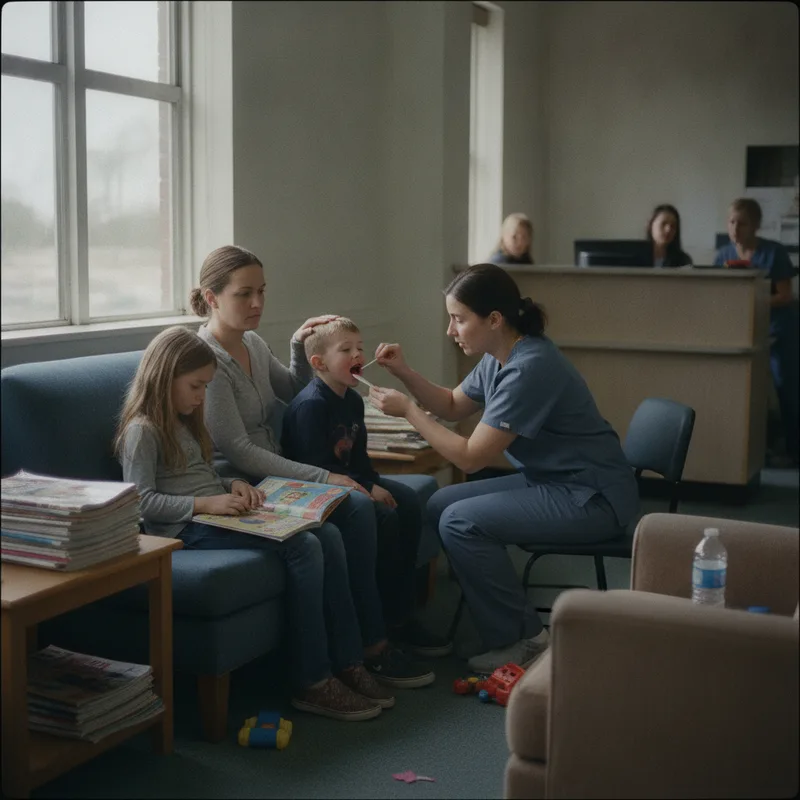
Sore throats are one of the most common reasons kids feel miserable, and most of them come from viruses that clear up on their own. A smaller number are caused by bacteria called group A strep, and those need antibiotics. You cannot tell the two apart for sure just by looking in your child's mouth, but some clues can point one way or the other. Here is how to think it through, and what happens next if your pediatrician suspects strep.
Most sore throats are viral
The same viruses that cause colds, flu and other common illnesses often cause a scratchy or painful throat. Viral sore throats usually come with other cold symptoms and get better in several days with rest and fluids. Antibiotics do not work against viruses, so they will not help, and they can cause side effects like diarrhea or rash.
Clues that point toward a virus
- Cough
- Runny or stuffy nose
- Hoarse voice
- Red, watery eyes
- Small sores or blisters in the mouth
- Diarrhea
When a sore throat comes with a cough and a runny nose, strep is less likely. It is still possible, though, so trust your instincts if your child seems sicker than a typical cold.
Clues that point toward strep
Strep throat is most common in school-age children and young teens. It is less common in children under 3. It tends to come on quickly and often looks like this:
- A sudden, painful sore throat, especially when swallowing
- Fever
- Red, swollen tonsils, sometimes with white patches or streaks of pus
- Tiny red spots on the roof of the mouth
- Swollen, tender glands in the front of the neck
- Headache
- Stomach ache, nausea or vomiting, which is more common in younger children
Some children with strep also get a fine, red rash that feels like sandpaper. It often starts on the neck and chest and spreads. This is called scarlet fever. It sounds alarming, but it is treated the same way as strep throat.
Even with these clues, doctors cannot diagnose strep by sight alone. Plenty of viral sore throats look red and angry too. That is why testing matters.
How strep is tested
Rapid strep test
A nurse or doctor rubs a swab over the back of your child's throat and tonsils. It takes only a few seconds, though it may cause a brief gag. Results are usually ready within minutes. If the test is positive, your child has strep and can start treatment.
Throat culture
Rapid tests can sometimes miss strep. For children and teens, a negative rapid test is often followed by a throat culture, which is sent to a lab. Results usually take a day or two. If the culture comes back positive, the office will contact you about starting antibiotics.
Testing is usually not needed when your child clearly has a cold with cough and runny nose, because strep is unlikely then. Your pediatrician will decide based on the full picture.
Treatment: antibiotics, and finishing them
Strep throat is treated with antibiotics. Penicillin or amoxicillin are common choices, and there are other options for children with a penicillin allergy. Most courses last several days, often 10, and your pediatrician will tell you exactly how long. Some children get a single shot instead of pills or liquid.
Your child will probably feel better within a day or two of starting medicine. Keep giving it until the course is finished, even if your child seems well. Stopping early can let the infection linger or come back. It also leaves your child at risk for rare but serious problems that full treatment helps prevent.
Comfort care at home
- Offer cool drinks, ice pops, soup and soft foods like yogurt or applesauce.
- Older children can gargle with warm salt water or suck on throat lozenges. Avoid lozenges and hard candy in young children because they are a choking risk.
- Acetaminophen or ibuprofen can ease pain and fever. Ask your pediatrician or pharmacist for the right dose for your child's weight. Do not give aspirin to children.
- Do not give honey to babies under 1 year old.
Going back to school
Strep spreads through droplets from coughs and sneezes and through shared cups and utensils. Current guidance from the CDC is that children with strep can return to school or child care once they no longer have a fever and have taken antibiotics for at least 12 hours. Your child's school or daycare may have its own rule, so check with them. Until then, keep cups, straws and utensils separate and remind everyone to wash hands often.
Possible complications
With treatment, most children recover without problems. Untreated or under-treated strep can sometimes lead to:
- A pocket of pus near the tonsils or in the neck
- Ear or sinus infections
- Rheumatic fever, which can affect the heart, joints and brain
- A kidney inflammation that can cause dark, cola-colored urine and swelling
These are uncommon, but they are the main reason doctors test and treat strep. You can learn more on MedlinePlus's strep throat page.
When to call us
Call your A thru Z Pediatrics office if:
- Your child has a sore throat with fever and no cold symptoms
- Your child has a sandpaper-like rash with a sore throat
- Someone in your home was just diagnosed with strep and your child has symptoms
- Your child is not drinking enough or is peeing less than usual
- Your child is not improving after two days on antibiotics
- Your child has dark urine, puffy eyes or swollen legs, or new joint pain, in the weeks after a sore throat
- Your baby under 3 months has a temperature of 100.4°F or higher. Call right away.
Call 911 or go to the nearest ER if your child has trouble breathing, is drooling or cannot swallow saliva, cannot open their mouth fully, has a stiff or very swollen neck, or seems very ill or hard to wake.
When you need an appointment, you can request a visit online.
This article is general information, not medical advice. If you have concerns about your child's health, call your A thru Z Pediatrics office.