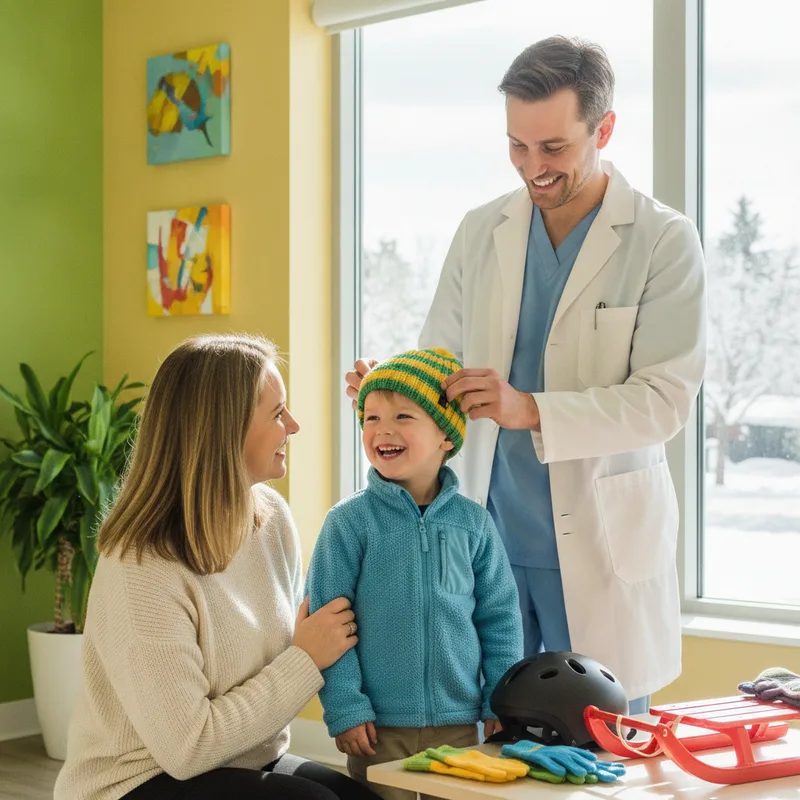
Snow is a rare treat for most San Antonio kids. It might come from a winter trip to the mountains, a visit to family up north, or one of the occasional cold snaps that turn South Texas white for a day. Because our children are not used to real cold, a little planning goes a long way. Here is how to keep snow days fun and safe.
Dress in layers
Several thin layers keep a child warmer than one thick one, and you can peel layers off as they warm up. A simple rule for babies and young children is to dress them in one more layer than an adult would wear in the same weather.
- Base layer: long underwear or a snug shirt and leggings. Avoid cotton next to the skin if you can, since it holds sweat and stays cold.
- Middle layer: a fleece or wool sweater and pants.
- Outer layer: a waterproof jacket and snow pants or bibs.
- Extras: a warm hat that covers the ears, waterproof mittens (they keep fingers warmer than gloves), warm socks, and waterproof boots that are a little roomy so blood can flow to the toes.
Skip scarves and drawstrings for young children, since they can get caught on play equipment. A neck gaiter or a jacket with a high collar is a safer choice.
Set time limits and take warm-up breaks
Kids rarely notice they are cold until they are very cold. Bring them inside every so often to warm up, have a drink and check their clothes. Wet clothing pulls heat away from the body quickly, so change out of damp gloves, socks and pants right away. Younger children and babies lose heat faster than older kids, so keep their outings shorter.
Know the signs of frostbite and hypothermia
Frostbite
Frostbite happens when skin and the tissue under it freeze. Fingers, toes, ears, cheeks and the nose are most at risk. Watch for skin that looks pale, gray or blotchy, feels hard or waxy, or tingles, burns or goes numb.
If you think your child has frostbite:
- Get them indoors and remove wet clothing.
- Soak the area in warm (not hot) water, or use body heat, like tucking fingers into an armpit.
- Do not rub the skin or use a heating pad, fireplace or hair dryer. Numb skin burns easily.
- Call your pediatrician if the skin stays numb, blisters, or does not return to normal color.
Hypothermia
Hypothermia means the body temperature has dropped too low. It is less common than frostbite but more serious. Signs include strong shivering, clumsiness, slurred speech, confusion, unusual sleepiness, or a baby with cold, bright red skin and very low energy. As shivering stops, the danger grows. Call 911, bring your child inside, remove wet clothes and wrap them in warm blankets while you wait. The MedlinePlus page on hypothermia explains more.
Sledding safety
- Choose a hill that is not too steep, is free of trees, fences and rocks, and ends in a flat area far from roads, ponds and parking lots.
- Have kids sit up and face forward, feet first. Lying head first raises the risk of head and neck injuries.
- Consider a helmet, especially for younger children.
- One rider at a time on a sled is safest, and an adult should be watching.
- Never let a child ride a sled pulled by a car, ATV or snowmobile.
Other winter play tips
- Ice: stay off frozen ponds, lakes and creeks unless local authorities say the ice is safe. In Texas, the ice is almost never thick enough.
- Snow forts and tunnels: these can collapse. Keep them small and stay nearby.
- Snowballs: no throwing at faces, and no packing ice or rocks inside.
- Sun: snow reflects sunlight, so kids can sunburn on a bright winter day. Use sunscreen on exposed skin for children older than 6 months, and sunglasses or goggles.
- Drinks and snacks: children still lose water in cold air. Offer water and warm drinks during breaks.
Car seats and winter coats
Puffy coats and snowsuits compress in a crash, which can leave the car seat harness too loose to hold your child. Buckle your child in with regular clothes or a thin fleece, tighten the straps, then put the coat on backward over the harness or tuck a blanket over them. The AAP's winter play tips on HealthyChildren.org cover this and more.
Cold snaps at home
When a hard freeze hits San Antonio, the bigger risks are often indoors. Use space heaters only with an adult nearby and keep them at least 3 feet from beds, curtains and children. Never use a grill, generator or gas oven to heat your home, since they can cause carbon monoxide poisoning. Make sure your smoke and carbon monoxide alarms work. If you suspect a poisoning, call Poison Control at 1-800-222-1222.
When to call us
Call your A thru Z Pediatrics office if your child's skin stays numb, pale or blistered after warming up, if they have a cough or fever after time out in the cold, or if you are not sure whether an injury from sledding needs to be checked. Read more about frostbite on MedlinePlus.
Call 911 or go to the nearest ER for signs of hypothermia (confusion, slurred speech, extreme sleepiness, shivering that stops), a head injury with vomiting, confusion or loss of consciousness, a neck or back injury, or any child who fell through ice.
For a checkup or sick visit, you can request a visit online.
This article is general information, not medical advice. If you have concerns about your child's health, call your A thru Z Pediatrics office.
Common questions
How should I dress my child for playing in the snow?
Dress kids in several thin layers: a base layer, a fleece or wool middle layer, and a waterproof outer layer. Add a warm hat that covers the ears, waterproof mittens, warm socks and waterproof boots.
What are the signs of frostbite in children?
Frostbite skin may look pale, gray or blotchy, feel hard or waxy, or tingle, burn or go numb. Fingers, toes, ears, cheeks and the nose are most at risk.
What should I do if I think my child has frostbite?
Get them indoors and remove wet clothing. Soak the area in warm (not hot) water or use body heat, and do not rub the skin or use a heating pad, fireplace or hair dryer.
What are the signs of hypothermia in a child?
Signs include strong shivering, clumsiness, slurred speech, confusion and unusual sleepiness. A baby may have cold, bright red skin and very low energy, and the danger grows as shivering stops.
How can kids go sledding safely?
Pick a hill that is not too steep, is free of trees, fences and rocks, and ends in a flat area far from roads and ponds. Kids should sit up and face forward, feet first, with one rider per sled and an adult watching.