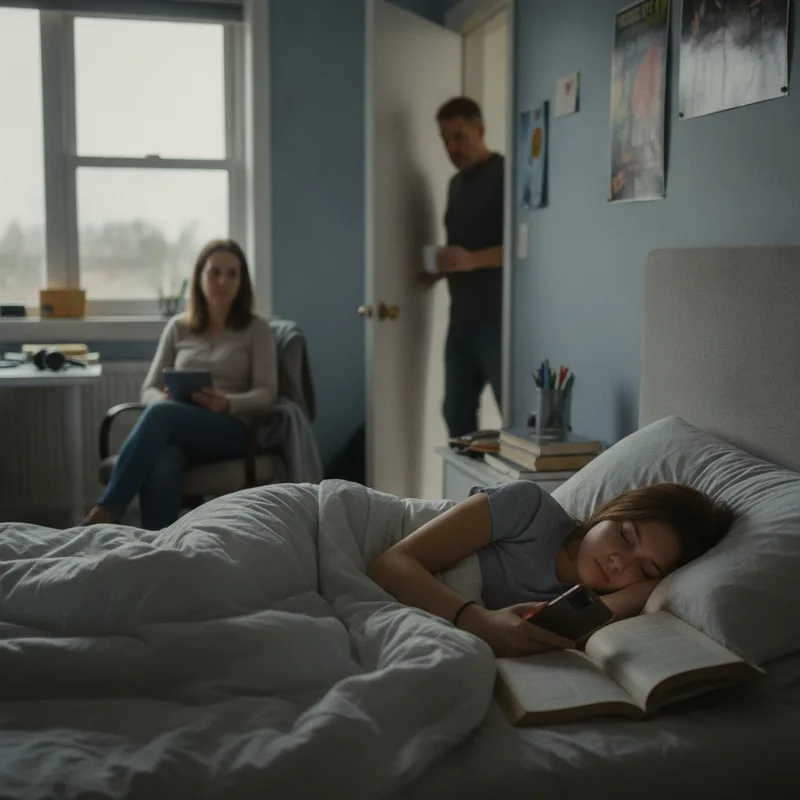
If your teenager stays up past midnight and is nearly impossible to wake for school, you are not alone. Teens are not just being lazy or stubborn. Their bodies and brains go through real changes in sleep during puberty, and those changes collide with early school start times, homework, jobs, sports and phones. The result is that many teens are short on sleep most of the week.
How much sleep do teens need?
The American Academy of Sleep Medicine recommends 8 to 10 hours of sleep every 24 hours for teens ages 13 to 18, and the American Academy of Pediatrics supports that guidance. Children ages 6 to 12 need even more, 9 to 12 hours. You can see the AAP's overview on how many hours of sleep children need.
Count backward from wake-up time. A teen who needs to be up at 6:30 a.m. should be asleep by about 10:30 p.m. to get even the low end of that range.
Why teens feel wide awake at night
During puberty, the body's internal clock shifts later, by up to about two hours. The brain starts releasing melatonin, the hormone that makes us sleepy, later in the evening. So a teen who used to fall asleep easily at 9 p.m. may not feel tired until 11 p.m. or later. This is biology, not a bad habit. Because of this shift, the AAP has encouraged middle and high schools to start later in the morning.
The trouble is that school bells do not move with your teen's body clock. Teens then try to catch up on weekends by sleeping until noon, which pushes the clock even later and makes Monday morning harder.
What too little sleep does
Ongoing sleep loss affects more than mood. Teens who are short on sleep are more likely to have:
- Trouble paying attention, remembering and learning
- Irritability, sadness and anxiety
- More risk-taking and poorer decisions
- More sports injuries and slower reaction times
- Changes in appetite and weight
- Getting sick more often
Sleep problems and depression often go together, and each can make the other worse.
Phones and screens
Phones are one of the biggest sleep stealers. Texts, games, videos and social media keep the brain alert, and notifications wake teens up during the night. The light from screens can also delay melatonin. Helpful rules:
- Turn off screens at least an hour before bed.
- Charge phones, tablets and laptops outside the bedroom overnight. Use a regular alarm clock.
- Keep TVs and gaming systems out of the bedroom.
- Parents can model this by parking their own phones for the night too.
Watch the caffeine
Coffee drinks, sodas, iced teas and energy drinks are everywhere, and caffeine can stay in the body for many hours. A late-afternoon iced coffee can still be keeping your teen awake at bedtime. The AAP advises that energy drinks are not appropriate for children and teens. Encourage water instead, and if your teen does have caffeine, keep it small and early in the day.
Making school nights work
- Keep a steady schedule. Aim for a similar bedtime and wake time every day. On weekends, try to keep wake-up within about two hours of the school-day time.
- Build a wind-down routine. A shower, reading a paper book, light stretching or quiet music signal the body it is time to sleep.
- Make the bedroom sleep-friendly. Cool, dark and quiet works best. In a San Antonio summer, a fan or air conditioning set cooler at night can help.
- Get morning light. Opening the blinds or stepping outside soon after waking helps reset the body clock earlier.
- Plan homework time. Help your teen look at the whole week. Too many activities can leave no room for sleep, and it is okay to cut back.
- Nap wisely. If your teen naps, keep it short, around 20 to 30 minutes, and before late afternoon.
- Be active during the day. Regular exercise helps sleep, but intense workouts right before bed can make it harder to settle.
Avoid sleep aids, supplements or melatonin unless you have talked with your pediatrician first. For more general tips, see healthy sleep on MedlinePlus.
Drowsy driving is a real danger
New drivers who are short on sleep are at higher risk of crashes. Drowsiness slows reaction time much like alcohol does. Teach your teen the warning signs: yawning, heavy eyelids, drifting out of the lane, or missing an exit. Make a family rule that a tired teen does not drive, and that they can always call you for a ride, no questions asked. Be extra careful after late games, practices, shifts at work and early-morning drives.
When it might be a sleep problem
Most teen sleep trouble improves with better habits. But some teens have a sleep disorder that needs care. Talk with your pediatrician if your teen snores loudly or stops breathing during sleep, cannot fall asleep even with good habits, falls asleep at school or in the middle of activities, or has strong urges to move their legs at night. The National Institute of Child Health and Human Development has more on sleep and health.
When to call us
Call your A thru Z Pediatrics office if your teen is regularly sleepy during the day despite enough time in bed, snores loudly, has trouble falling or staying asleep for weeks, or if poor sleep comes with sadness, anxiety or falling grades.
Call 911 or go to the ER after any crash or if your teen is in danger. If your teen talks about hurting themselves, call or text 988 or call 911.
To talk about your teen's sleep, request a visit.
This article is general information, not medical advice. If you have concerns about your child's health, call your A thru Z Pediatrics office.