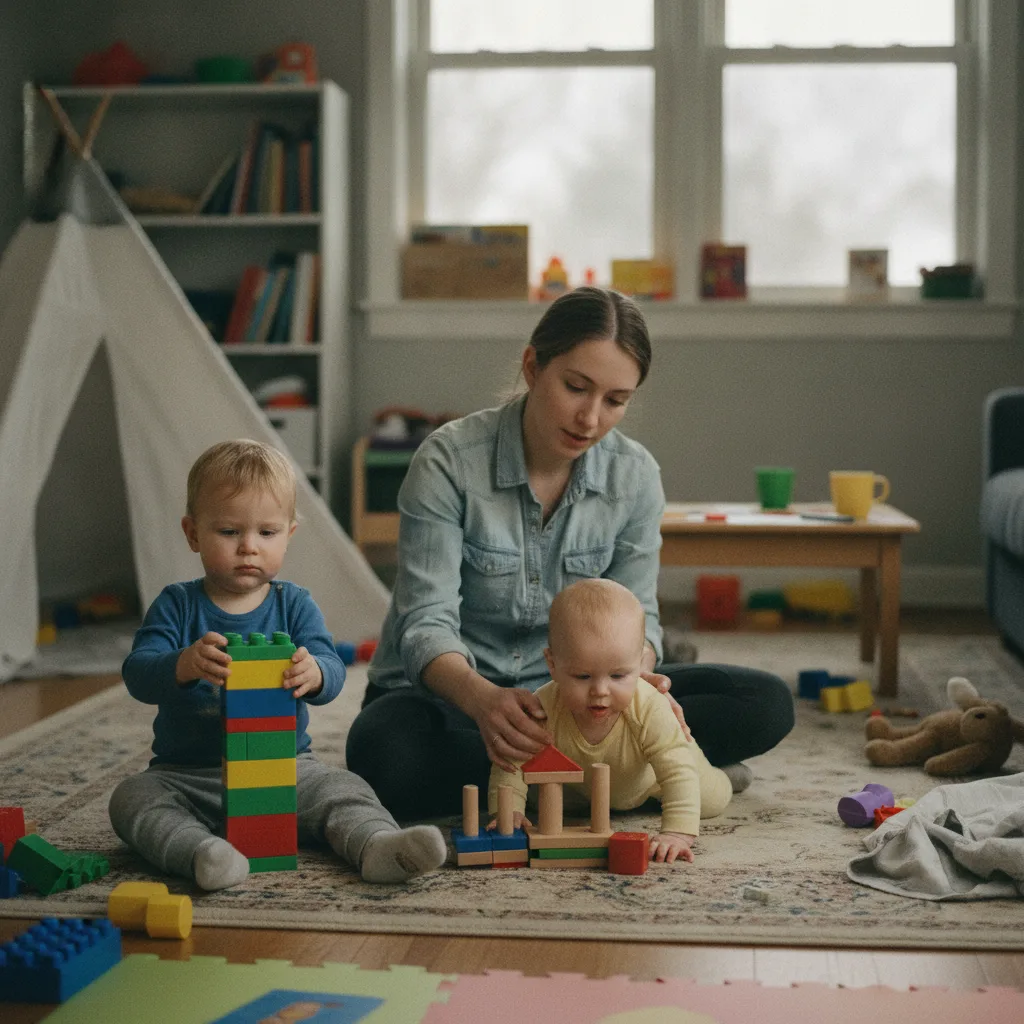
When your baby shakes a rattle or your toddler dumps every block out of the bin, it can look like simple fun. It is also how young children learn. Play builds muscles, teaches language, and helps children figure out how the world works and how to get along with people. You do not need fancy toys or a plan. What helps most is you: your face, your voice, and your time.
Why play matters so much
In the first three years, a child's brain makes connections faster than at any other time. Everyday back-and-forth moments help build those connections. Your baby coos, you coo back. Your toddler points, you name the thing. Researchers call this "serve and return," and it happens naturally during play.
Play also lets children practice things they cannot do yet, like reaching, stacking or taking turns, in a safe way. And when play is a little hard, it teaches patience and problem solving. The American Academy of Pediatrics explains more in the power of play.
Birth to 3 months: faces and voices
- Face time. Hold your baby about 8 to 12 inches from your face. Smile, make faces and give them time to watch.
- Talk and sing. Describe what you are doing as you change or bathe them. The words do not need to be special.
- Tummy time. A few short sessions a day while awake and watched builds neck and arm strength.
- Things to look at. Bold black-and-white patterns and slow-moving objects catch young eyes.
4 to 6 months: reaching and grabbing
- Hold a soft toy or rattle just within reach so your baby stretches for it.
- Let them hold and mouth safe toys of different textures.
- Prop an unbreakable mirror in front of them during tummy time.
- Copy their sounds and wait for them to "answer."
- Place a toy just to the side to encourage rolling.
7 to 12 months: cause and effect
- Peekaboo and hiding games. Hide a toy under a cloth and let your baby find it. This teaches that things still exist when out of sight.
- In and out. Give a plastic container and a few blocks to drop in and dump out.
- Bang and clap. Wooden spoons on a pot, or clapping songs, show that actions make things happen.
- Little fingers. Soft finger foods at mealtime help your baby practice the thumb-and-finger pinch.
- Move. Give safe floor space to crawl, and sturdy furniture to pull up on.
1 to 2 years: doing it myself
- Stacking and sorting. Blocks, nesting cups and simple shape sorters build hand control and thinking.
- Push and pull toys. A toy cart or wagon helps new walkers find their balance.
- First scribbles. Chunky crayons on large paper strengthen the grip used later for writing.
- Name everything. Point to and name body parts, foods, animals and colors throughout the day.
- Simple helping. Let your toddler "help" put socks in the basket or wipe the table.
2 to 3 years: pretend and play together
- Pretend play. A toy kitchen, a doll, or a cardboard box that becomes a car lets children act out what they see. This builds language and empathy.
- Squish and build. Play dough, sand, water play and large puzzles work small hand muscles.
- Big body play. Running, climbing, kicking a ball and dancing build strength and coordination. In San Antonio summers, plan outdoor play for early morning or evening, and bring water and shade.
- Taking turns. Simple games, like rolling a ball back and forth, teach waiting and sharing.
- Songs with actions. Rhymes with hand motions connect words, rhythm and movement.
Read aloud every day
You can start reading from birth. Babies love the sound of your voice and the closeness. Board books with bright pictures work well for little hands. As your child grows, ask questions like "Where is the dog?" and let them turn the pages. Reading the same favorite book many times is fine. Repetition helps children learn words and know what comes next. Reading in English, Spanish or any language your family speaks at home all help.
One note on screens: for babies and young toddlers, hands-on play and talking with people teach far more than videos, so keep screen use low other than video chats with family.
Keep play safe
- Choose toys made for your child's age. Anything that fits through a toilet paper tube is a choking risk for children under 3.
- Keep button batteries, small magnets, balloons and coins out of reach. If you think your child swallowed a battery or magnet, go to the ER right away.
- Check toys for loose parts or sharp edges.
- Stay close during water play. Young children can drown in only a few inches of water.
For other questions about poisonous items, call Poison Control at 1-800-222-1222.
Follow your child's lead
You do not need to fill every minute. Watch what interests your child and join in. If they lose interest, that is fine. Some quiet time without toys is good too. Children who seem bored often find their own way to play. Learn more about early learning from the AAP on brain-building ways to play with your baby.
When to call us
Call your A thru Z Pediatrics office if your child does not seem interested in people or play, loses skills they had, does not use their hands or legs equally, or is not making sounds or words you expect for their age.
Call 911 or go to the ER if your child is choking and cannot breathe, cough or cry, has a seizure, or may have swallowed a button battery or magnets.
Questions about how your child is growing and learning? You can request a visit.
This article is general information, not medical advice. If you have concerns about your child's health, call your A thru Z Pediatrics office.