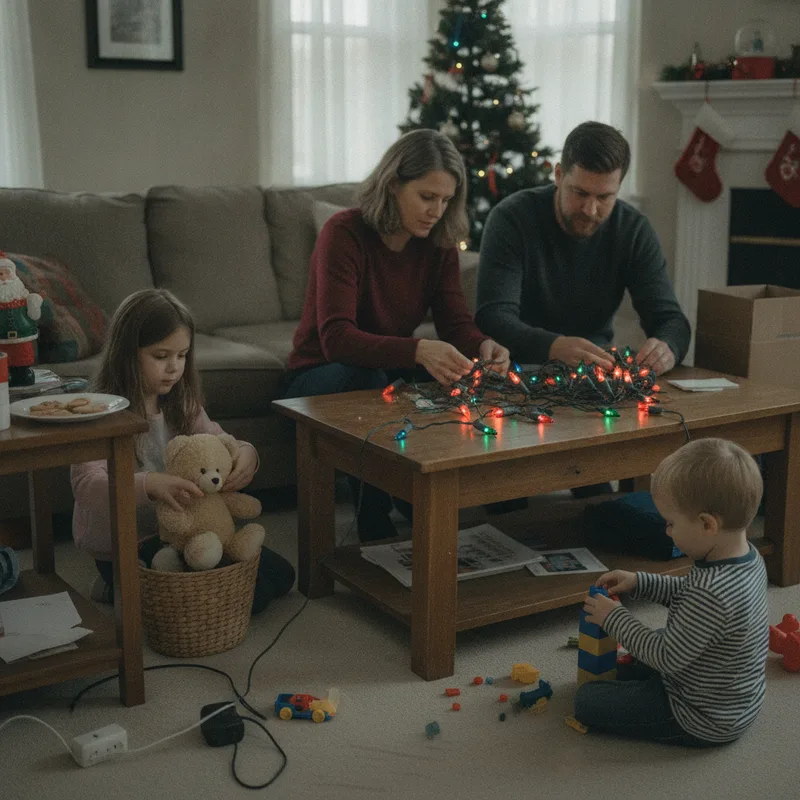
The holidays bring new toys, twinkling lights and a house full of guests. They also bring a few hazards that most of the year we do not have to think about. Many holiday injuries in children come from the same handful of sources: small parts, batteries, magnets, decorations and new wheels. A little planning before the gifts are opened can keep the season merry.
Choosing age-right toys
The age label on a toy box is about safety, not just how smart a child is. A toy marked "3+" may have small parts that a toddler could choke on, even if your 2-year-old is very advanced.
- Under 3: Avoid toys with small parts, small balls, marbles, and anything that fits easily into the mouth. A handy home check: if a toy or piece fits through an empty toilet paper tube, it is too small for a child under 3.
- Balloons: Uninflated or broken balloons are a serious choking risk for young children. Keep them away from kids under 8 and throw away pieces right away.
- Strings and cords: Avoid long cords and ribbons on toys for babies and toddlers because of the strangling risk.
- Toys that shoot objects can cause eye injuries. Supervise closely, or skip them for young kids.
- Electric toys should be labeled "UL Approved." Toys with heating parts are not for young children.
Older siblings' gifts are a common source of small parts in homes with toddlers. Set up a spot for big-kid toys that the little ones cannot reach, and help everyone pick up after playing. The AAP's guide on how to buy safe toys has more tips.
Button batteries and magnets: treat as an emergency
Two small items deserve special attention, because swallowing them can cause severe injury within hours.
Button and coin batteries
These flat, round batteries power remote controls, musical cards, light-up ornaments, flameless candles, key fobs, watches and many toys. If a child swallows one, it can get stuck in the throat and burn through tissue in as little as two hours. Children may seem fine at first.
- Choose products whose battery compartments close with a screw. Tape shut any that do not.
- Store spare and used batteries locked up, and recycle used ones promptly.
- Check holiday decorations and greeting cards before setting them out.
The AAP has a room-by-room holiday battery safety walkthrough that is worth a look.
High-powered magnets
Small, strong magnets are found in building sets, desk toys and some jewelry. If a child swallows more than one, or a magnet plus a metal object, they can pull together through the walls of the intestines and cause holes or blockages. Keep these toys out of homes with young children, and check that magnets in older kids' toys are sealed in and cannot fall out.
If you think your child swallowed a button battery or a magnet, go to the emergency room right away. Do not wait for symptoms, and do not try to make your child vomit. You can call Poison Control at 1-800-222-1222 on the way for advice.
Tree and light safety
- If you buy a live tree, pick a fresh one with needles that do not fall off easily, and keep the stand filled with water. A dry tree catches fire quickly.
- If you use an artificial tree, look for a "fire resistant" label.
- Place the tree away from fireplaces, heaters and candles, and out of walkways.
- Anchor the tree so a climbing toddler or a curious pet cannot pull it over.
- Hang glass ornaments and ornaments with small parts or hooks up high, where little hands cannot reach.
- Check light strings for frayed wires and broken sockets, and follow the package limit on how many strands to connect.
- Some light strings contain lead. Keep them away from young children and wash hands after handling them.
- Turn off tree and outdoor lights when you go to bed or leave the house.
Candles look lovely but are a burn and fire risk. Keep them well out of reach, never leave them burning in an empty room, and consider flameless candles, keeping their batteries secured.
The AAP's list of holiday decoration safety tips covers trees, lights and candles in more detail.
Holiday plants
Some festive plants can make a child sick if eaten. Mistletoe berries, holly berries and Jerusalem cherry are among the ones to keep out of reach. Poinsettias are often called deadly, but they usually cause only mild stomach upset or mouth irritation. Still, it is best to keep all plants up high. If your child eats part of a plant and you are not sure it is safe, call Poison Control at 1-800-222-1222.
Ride-on toys, bikes and helmets
Bikes, scooters, skateboards and hoverboards are popular gifts. In San Antonio, mild winter weather means they often go straight outside on day one. Make the helmet part of the gift:
- Buy a helmet at the same time, sized to fit, and have your child wear it every ride from the very first one.
- A helmet should sit level on the head, just above the eyebrows, with the strap snug under the chin.
- Add elbow and knee pads and wrist guards for skating and skateboarding.
- Pick a ride-on that fits your child's size and skill now, not one to "grow into."
- Keep riding to sidewalks, parks and driveways away from traffic, with an adult watching younger kids.
A few other holiday hazards
- Guests' bags and coats may hold medicines. Put them in a closed room up high.
- Alcohol left in glasses after a party can poison a small child. Clear drinks right away.
- Wrapping paper, ribbons and packaging can be choking and suffocation risks. Clean up as gifts are opened.
- Hot food and drinks in a busy kitchen can cause burns. Keep kids out of the cooking area.
When to call us
Call your A thru Z Pediatrics office if your child has a minor injury from a new toy, swallowed a small object that is not a battery or magnet and is breathing, eating and acting normally, or if you have questions about whether a toy is safe for their age.
Go to the ER right away if your child may have swallowed a button battery or magnets, or has drooling, trouble swallowing, vomiting, or chest or belly pain after swallowing any object. Call 911 if your child is choking and cannot breathe, cough or speak, turns blue, has a seizure, or is very hard to wake.
Have a question about your child's health this season? Request a visit.
This article is general information, not medical advice. If you have concerns about your child's health, call your A thru Z Pediatrics office.