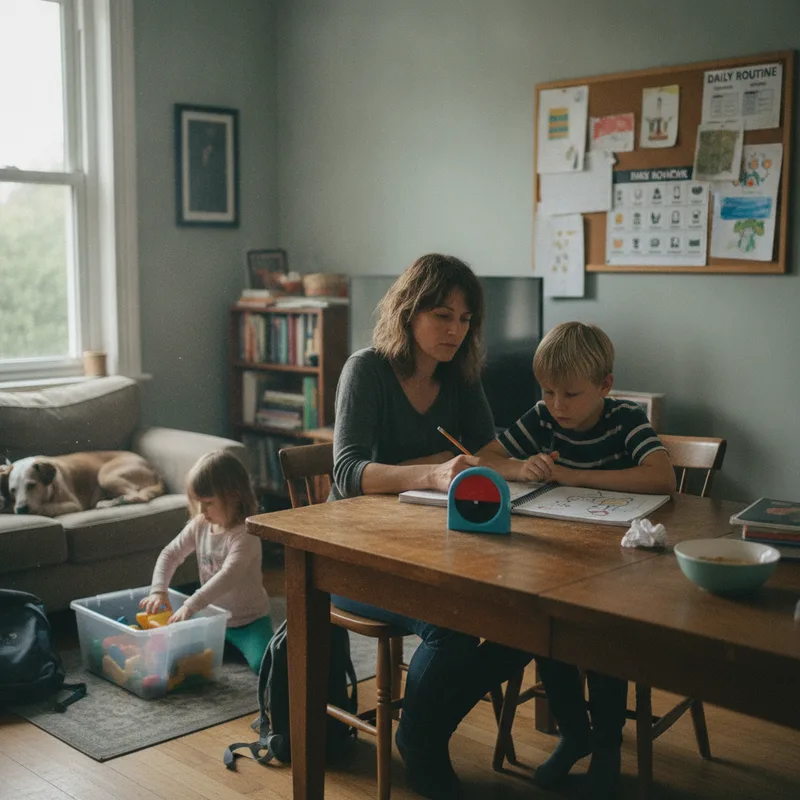
For a child with ADHD, a regular day can feel like a long list of surprises. When will we leave? What comes after dinner? Where are my shoes? Routines take the guessing out of the day. When the same steps happen in the same order, your child spends less energy remembering what to do, and you spend less time repeating yourself. This article focuses on the practical side: building morning and bedtime routines, giving instructions that stick, and keeping everyone in the household on the same page.
Why routines help children with ADHD
ADHD makes it harder to plan, hold several steps in mind and switch from one task to the next. Adults often handle these jobs for themselves without thinking. A routine works like an outside helper for those skills. Over time, steps that are repeated every day become habits, and habits take much less effort. Routines also cut down on arguments, because "this is what we always do" is easier to accept than a new request each time.
Building a morning routine
Mornings are often the most stressful time in a household with ADHD. A few changes can make them smoother.
- Do as much as possible the night before. Lay out clothes, pack the backpack, sign school papers and put shoes by the door.
- Keep the list short. Wake up, bathroom, get dressed, breakfast, brush teeth, shoes and backpack. Five or six steps is enough.
- Same order every day. Do not switch the order around. The point is that your child does not have to think about it.
- Save screens for last. If TV or tablet time is allowed in the morning, it comes only after everything else is done. Turning a screen off to get dressed is much harder than earning it after.
- Plan for medicine. If your child takes ADHD medicine in the morning, make it part of breakfast so it is not forgotten. Ask your pediatrician if the timing seems off.
Building a bedtime routine
Many children with ADHD have trouble settling down and falling asleep, and tired children have a harder time with attention the next day. A steady bedtime routine helps the body learn when it is time to rest.
- Pick a set bedtime and wake time, and keep them close to the same on weekends.
- Turn off screens at least an hour before bed. Keep phones, tablets and TVs out of the bedroom.
- Follow the same calm steps each night: bath or shower, pajamas, brush teeth, read together, lights out.
- Keep the bedroom cool, dark and quiet. In a San Antonio summer, a fan or a cool room can make a real difference.
- Avoid caffeine, including soda and tea, especially in the afternoon and evening.
Talk to your pediatrician before giving any sleep aid, including melatonin. If your child snores loudly, wakes often or still cannot fall asleep after weeks of a good routine, let us know.
Use visual schedules and tools
Children with ADHD often remember what they see better than what they hear.
- Picture or word charts. Post a simple chart in the bathroom, bedroom or by the door showing each step. Younger children do well with pictures. Older children can use a checklist.
- Timers. A visual timer that shows time running out helps children understand "five more minutes."
- Bins and labels. Give everything a home. A clear bin for shoes, a hook for the backpack, a basket for homework.
Give instructions that work
How you ask matters as much as what you ask. These steps make it more likely your child will follow through.
- Get their attention first. Go to your child, make eye contact and say their name. Calling from another room rarely works.
- Give one step at a time. "Put on your shoes" works better than "Get ready to go."
- Be specific and positive. Say what to do, not what not to do. "Walk inside, please" instead of "Stop running."
- Ask them to repeat it. This helps them hold onto it.
- Stay close. Check back in a minute or two, and praise them when it is done.
Reward what you want to see
Children with ADHD often hear far more corrections than compliments. Turning that around can change the mood of your home.
- Praise specific actions right away. "You got dressed before breakfast. Great job" tells your child exactly what went right.
- Try a point or sticker system. Children earn points for finished routine steps and trade them for small rewards, like choosing dinner, extra reading time with a parent or a trip to the park.
- Keep rewards frequent and small. A reward at the end of the month is too far away for most children with ADHD. Daily or even same-hour rewards work better at first.
- Use calm, predictable consequences. When a rule is broken, use a short consequence you already agreed on, such as losing a privilege for the evening. Avoid yelling or spanking. The AAP advises against physical punishment.
Keep caregivers on the same page
Routines work best when they are the same no matter who is in charge. Children with ADHD can get confused, or test limits, when rules change between parents, grandparents, sitters or two households.
- Write down the morning and bedtime routines and share them with everyone who cares for your child.
- Agree on the main rules, rewards and consequences.
- Keep teachers in the loop. A simple daily note or app message between home and school helps catch problems early.
Expect setbacks
New routines take weeks to settle in. Holidays, illness, a new sibling or the start of school can throw things off. When that happens, go back to the basics and keep going. Small, steady wins matter more than a perfect week. Taking care of yourself also counts. A rested, supported parent has more patience for the hard moments.
For more parent tips, see ADHD information from the AAP on HealthyChildren.org and MedlinePlus's ADHD page.
When to call us
Call your A thru Z Pediatrics office if routines are not helping after a few weeks of steady effort, if your child has ongoing sleep trouble, if behavior at home or school is getting worse, or if you have questions about medicine timing or side effects. You can also ask about parent training in behavior management, which the AAP recommends as part of ADHD care.
Call 911 or go to the ER if your child is in danger of hurting themselves or others, or for any medical emergency.
To talk through your child's routines and treatment plan, request a visit.
This article is general information, not medical advice. If you have concerns about your child's health, call your A thru Z Pediatrics office.