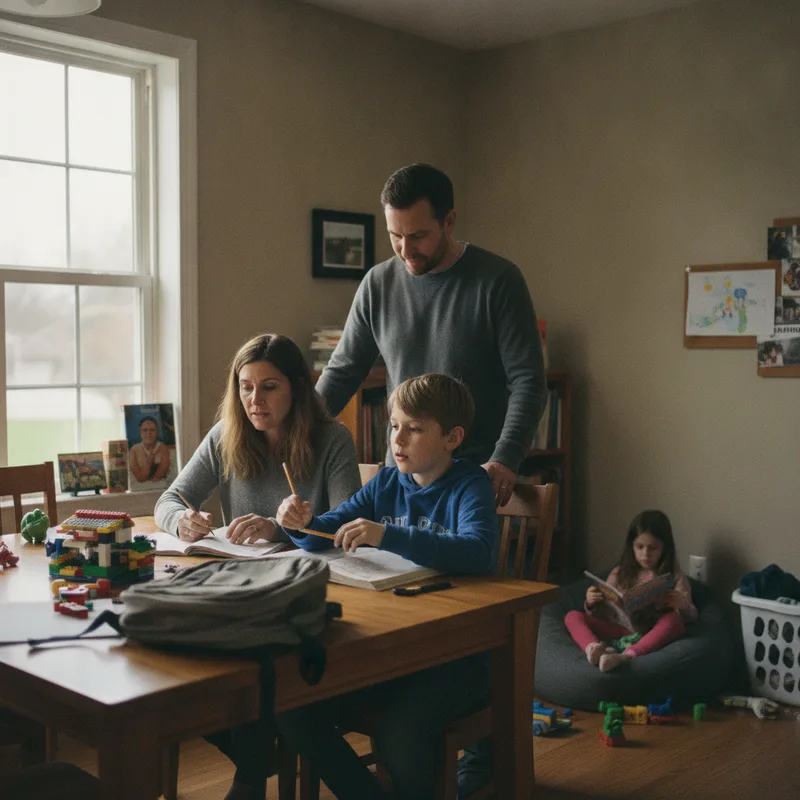
For a child with ADHD, school can feel like a long list of things that are hard: sitting still, waiting a turn, following multi-step directions, keeping track of papers and finishing work on time. Many of these children are bright and eager, but their grades and report cards do not show it. The good news is that the right mix of support at home and at school can make a real difference. Here is how parents can help.
Build a team with the teacher
Your child's teacher sees things you do not, and you know things the teacher does not. Working together is one of the most helpful steps you can take.
- Meet early in the year. Share what helps your child focus, what tends to set them off, and any treatment your child is getting. Ask what the teacher is noticing.
- Agree on how to stay in touch. A short weekly email or a shared notebook can catch small problems before they grow.
- Try a daily report card. This is a simple sheet with two or three specific goals, such as "turns in homework" or "raises hand before speaking." The teacher marks it each day and your child earns small rewards at home for meeting goals. It connects home and school and is one of the classroom approaches the AAP recommends for ADHD.
- Share results with your pediatrician. Teacher input helps your pediatrician judge how treatment is working. Bring rating forms or notes to follow-up visits.
504 plans and IEPs
Public schools have two main ways to provide formal support for children with ADHD. In general:
- A 504 plan comes from a federal civil rights law. It gives accommodations that help a child access learning in the regular classroom. Examples include extra time on tests, seating near the teacher and away from distractions, movement breaks, written copies of instructions, and fewer problems on an assignment that still show mastery.
- An IEP (Individualized Education Program) is part of special education. It is for children whose condition affects learning enough that they need specially designed instruction, such as extra help in reading, writing or organizing, along with goals that are tracked over time. Children with ADHD may qualify under a category such as "other health impairment."
To start, write a dated letter or email to the school principal or counselor asking for an evaluation, and describe your concerns. Keep copies of everything. Your pediatrician can provide a letter about the diagnosis, but the school makes the decision about eligibility through its own process. You are part of the team at every meeting, and you can ask questions or ask for changes if a plan is not working.
Homework without the nightly battle
- Same time, same place. A quiet spot with supplies ready, away from the TV and phone, cuts down on start-up struggles.
- Break it into chunks. Use a timer for short work periods, then a brief movement break. Ten to twenty minutes of focus at a time is a good start for many children.
- Start with a plan. Look at all assignments together and decide the order. Some kids like to start with the easiest task to build momentum.
- Stay nearby. Being in the room, without doing the work for them, helps many children stay on track.
- Check medicine timing. If your child takes ADHD medicine that wears off before homework, mention it to your pediatrician.
- Talk to the teacher if homework takes far longer than expected. Shortened assignments can be an accommodation.
Reading and learning support
Many children with ADHD also have a learning disability, such as dyslexia, or trouble with writing or math. Signs include reading far below grade level, avoiding reading out loud, spelling that does not improve, or very slow, messy writing. If your child is still struggling after ADHD treatment is in place, ask the school to evaluate for learning disabilities. Reading aloud together, audiobooks alongside print books, and short daily reading practice can help in the meantime.
Getting organized
Trouble with organization and planning is part of ADHD, not laziness. Children need these skills taught directly, and they need more practice than their peers.
- Use one binder or a color-coded folder for each subject, with a single "take home" folder for papers.
- Keep a planner, paper or digital, and check it together each day.
- Pack the backpack the night before and leave it by the door.
- Post a picture or written checklist for morning and bedtime routines.
- Break big projects into steps with their own due dates on a calendar.
- Use alarms and reminders on a phone or watch for older kids and teens.
Praise effort and progress, not just grades. Children with ADHD often hear a lot of correction, and noticing what goes well builds confidence.
Medicine at school
If your child needs a dose of medicine during the school day, the school nurse will need a signed form from your pediatrician and a properly labeled supply. Ask the nurse what your school requires before the first day.
To learn more, see the National Institute of Mental Health's ADHD page, the AAP's ADHD section on HealthyChildren.org, and MedlinePlus.
When to call us
Call your A thru Z Pediatrics office if grades or behavior are slipping, the teacher reports new concerns, you think medicine timing or side effects need a change, you need forms for school, or your child seems sad, anxious or down on themselves about school.
Call 911 or go to the ER if your child is in danger, has taken too much medicine, or talks about hurting themselves. Call or text 988 for a mental health crisis. For a possible accidental overdose, you can also call Poison Control at 1-800-222-1222.
To review your child's ADHD plan before the next semester, request a visit.
This article is general information, not medical advice. If you have concerns about your child's health, call your A thru Z Pediatrics office.