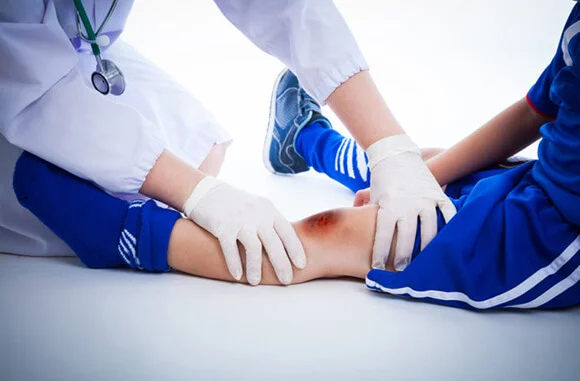
Why Accurate Triage Matters
High‑school athletes log over 500 contact hours each season; ankle rolls and wrist jams top the list of sideline visits. Misjudging a fracture as a “minor sprain” can delay bone setting, prolong pain, and increase arthritis risk by 50 percent later, per the American Academy of Orthopaedic Surgeons . Learning quick at‑home checks, and red‑flag signs for X‑rays, saves both seasons and joints.
Sprain vs Break: Quick‑Look Checklist
If two or more break signs appear, skip home care, head for X‑ray.
The R.I.C.E.R. Protocol (First 48 Hours)
Avoid heat, massage, and running “to see if it loosens up” during this window.
Home‑Care Toolkit for Teen Athletes
Tape this list inside the sports bag for faster post‑game triage.
Pain‑Scale & Function Test (10‑Minute Check)
- Rate pain 0-10 (goal < 4 after OTC meds).
- Flex/extend, can teen move joint through 50 % range?
- Bear weight (ankle/knee) for two steps without buckling?
- Grip strength (wrist) compared to uninjured hand, use handshake test.
- Neuro check, numbness or tingling suggests nerve involvement.
Fail ≥ 2 tests → clinic X‑ray.
Over‑the‑Counter Meds & Dosages
Alternate doses every three hours for combined relief; always take ibuprofen with food to protect stomach lining.
Red‑Flag Signs, Head to X‑Ray or ER
- Bone deformity or joint misalignment
- Open wound exposing bone or ligament
- Numbness, tingling, or “pins & needles” beyond 20 minutes
- Inability to move fingers or toes distal to injury
- Severe night pain or pain unrelieved by OTC meds
- Swelling worsening after 48 hours despite R.I.C.E.
Same‑day injury consults available, skip ER waits for quick films and treatment.
Myth‑Busting Corner
Myth 1: “If you can wiggle it, it’s not broken.”
Reality: Hairline fractures often allow motion; pain on bone line is key.
Myth 2: “Ice for 24 hrs, then switch to heat.”
Reality: Keep icing sprains up to 72 hours; heat too soon expands vessels, adding swelling.
Myth 3: “Popping it back saves time.”
Reality: Improper reduction can sever growth plates, always image before realignment.
For further reading, see the American College of Sports Medicine position stand.
Return‑to‑Play Timeline (Typical Cases)
Always pain‑free full ROM + strength before clearance.
Home Rehab Exercises (Start Day 3 for Sprains)
- Alphabet toes (ankle): trace A-Z in air, boosts mobility.
- TheraBand wrist curls: 3 sets × 15 reps each way.
- Single‑leg balance eyes closed: aim 30 sec hold, prevents re‑sprain.
- Putty squeeze (finger): 3 sets × 10 squeezes, clay grip strengthens flexors.
Stop if pain > 2/10; resume next day.
Preventing Future Sideline Time
- Dynamic warm‑up (lunges, skips) reduces lower‑limb injuries by 35 percent .
- Replace cleats every 80 hours play, worn studs increase ankle rolls.
- Strength‑train twice weekly: squat, hip abductor, and scapular rows counter muscular imbalances.
- Encourage multi‑sport seasons; year‑round single sport doubles overuse‑injury risk.
External Resources for Parents & Coaches
- STOP Sports Injuries Toolkit, guides on ankle, knee, shoulder care.
- NATA Heat‑Illness Handout, plan for two‑a‑day practices.
Both open in new tabs, letting you keep this blog handy courtside.
Sideline to Safe Line, Your Next Step
Early ice and compression keep swelling tame; accurate pain and function checks decide X‑ray timing. Log symptoms, follow R.I.C.E.R., and partner with your pediatric clinic for imaging and PT referrals that get teens back in the game, safely.
Need Hands‑On Assessment Fast?
Same‑day injury consults available, onsite X‑ray, splinting, and a clear return‑to‑play roadmap.
This article is general information, not medical advice. If you have concerns about your child's health, call your A thru Z Pediatrics office.