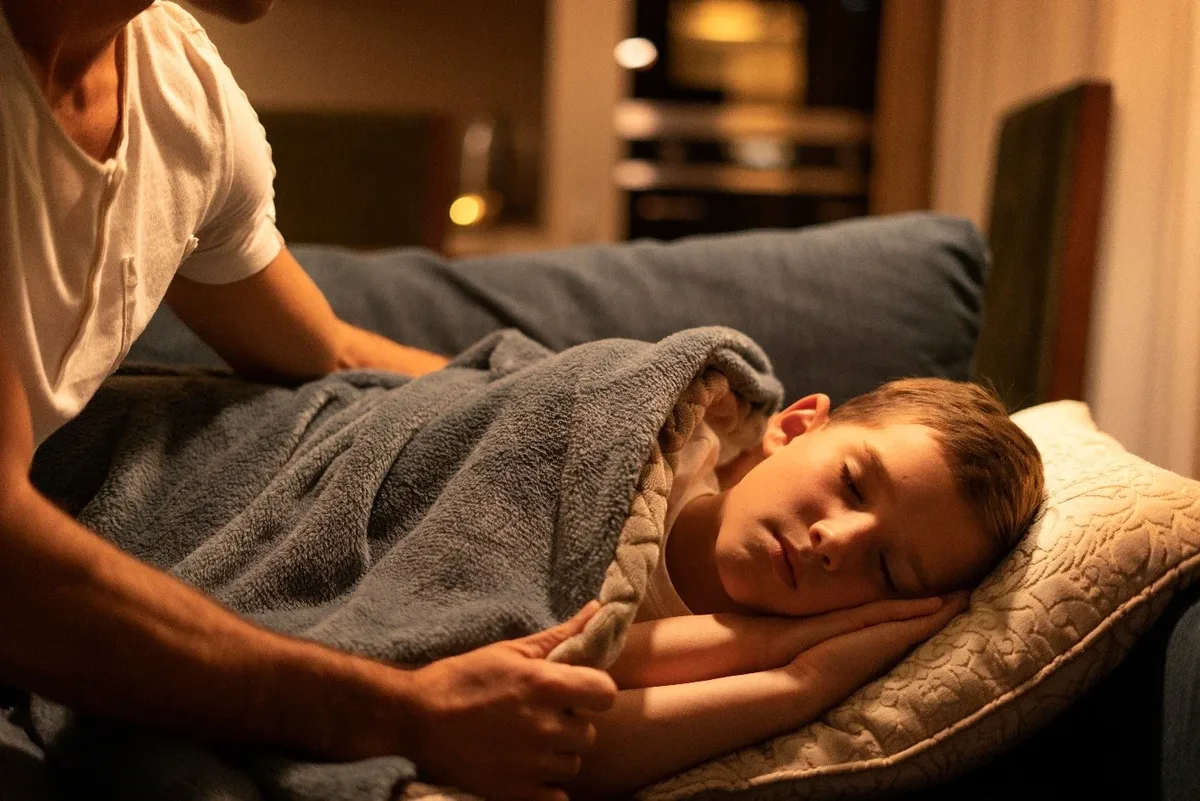
Why Sleep Fuels Grades & Mental Health
Rapid brain growth continues through high‑school senior year. During slow‑wave sleep, neurons replay newly learned algebra steps; in REM, emotional centers process stress from social media and exams. Teens sleeping < 7 hours score 72 points lower on the SAT verbal section on average and report 2‑times higher depression rates, according to the National Sleep Foundation. Adequate rest isn’t a luxury, it’s the secret study hack crammers overlook.
How Much Sleep Do Teens Need?
The American Academy of Sleep Medicine prescribes 8-10 hours nightly for ages 13‑18. Not all shut‑eye is equal: consistent bed and wake times anchor the internal clock better than one long weekend catch‑up.
Sleep Debt Math
Debt greater than 10 hours is linked to Monday “social jet lag” symptoms, brain fog and irritability.
Teen Sleep Tips: The 5‑Step Evening Blueprint
1. Tech Taper at T‑60
Silence notifications and shift screens to red‑tone “night mode” one hour before lights out. Blue light suppresses melatonin twice as strongly in adolescents as adults.
2. Homework “Power Pie”
Split assignments: 25‑minute intense focus + 5‑minute stretch. Four cycles equal two hours of study done before 9 p.m., freeing the last hour for wind‑down.
3. Carb‑Smart Snack
Pair whole‑grain toast with almond butter. Complex carbs raise serotonin; tryptophan in nuts converts into melatonin.
4. Cool & Dark Cave
Set bedroom temp to 65-68 °F (18-20 °C) and use blackout curtains. Core body temp must drop 1-2 °F to trigger sleep onset.
5. Brain Dump Journal
Write tomorrow’s to‑do list and one gratitude line. Externalizing worries quiets the prefrontal cortex, cutting sleep‑onset time by 15 minutes in studies.
Myth‑Busting Corner
Myth 1: “I’m a night owl; can’t change it.”
Reality: Circadian rhythm can shift 30 minutes earlier each week with consistent lights‑off and dawn light exposure.
Myth 2: “Energy drinks help me focus.”
Reality: 200 mg caffeine after 4 p.m. delays melatonin by 90 minutes and fragments deep sleep.
Myth 3: “Weekend catch‑up erases sleep debt.”
Reality: Brain imaging shows attention lapses persist after two nights of recovery.
Daytime Habits That Set Up Night Success
See the study‑habits section on our Teen Well Checks page for more strategies.
Sample “Tech‑Lite” Evening Schedule
Adjust backward for early bus schedules; aim for consistent 15‑minute windows nightly.
Recognizing Red‑Zone Sleep Deprivation
- Dozes off in class or during 15‑minute car rides
- Needs three alarms yet still late
- Craves sugary snacks every afternoon
- Mood swings or tearfulness over small setbacks
- Weekend sleep‑ins exceeding 3 hours past weekday wake time
If three or more signs persist two weeks, time for a sleep‑hygiene reset, or a professional screening for insomnia or mood disorders.
Tools & Apps Teens Actually Use
Encourage teens to audit apps Sunday night, delete scroll‑traps before exams.
Sleep & Sports Performance
Basketball players adding one extra hour nightly improved free‑throw accuracy by 9 percent. Muscles repair during slow‑wave sleep; growth hormone pulses peak at midnight, so pre‑midnight hours matter most for athletes.
Parent Coaching Tips
- Model habits, put your own phone in the charging dock by 9 p.m.
- Set Wi‑Fi off timer, router schedules cut temptation; keep an emergency data line if needed.
- Negotiate, don’t dictate, let teens choose blackout‑curtain color or alarm sound; ownership breeds follow‑through.
- Praise mornings, notice on‑time departures to reinforce new habit loops.
External Resources Worth Bookmarking
- SleepFoundation.org Teen Sleep Toolkit, printable checklists.
- American Academy of Pediatrics “Bright Futures” Sleep Section, medical guidelines for providers (open in new tab).
Sleep Now, Succeed Tomorrow
Memory lockers, mood regulators, muscle builders, they all clock in after lights‑out. A few bedtime tweaks convert late‑night cramming into crisp morning recall and calmer emotions.
Ready for Personalized Guidance?
Book an academic‑year wellness visit, our pediatricians review sleep habits, screen for mood issues, and craft a study‑sleep balance tailored to your teen.
This article is general information, not medical advice. If you have concerns about your child's health, call your A thru Z Pediatrics office.