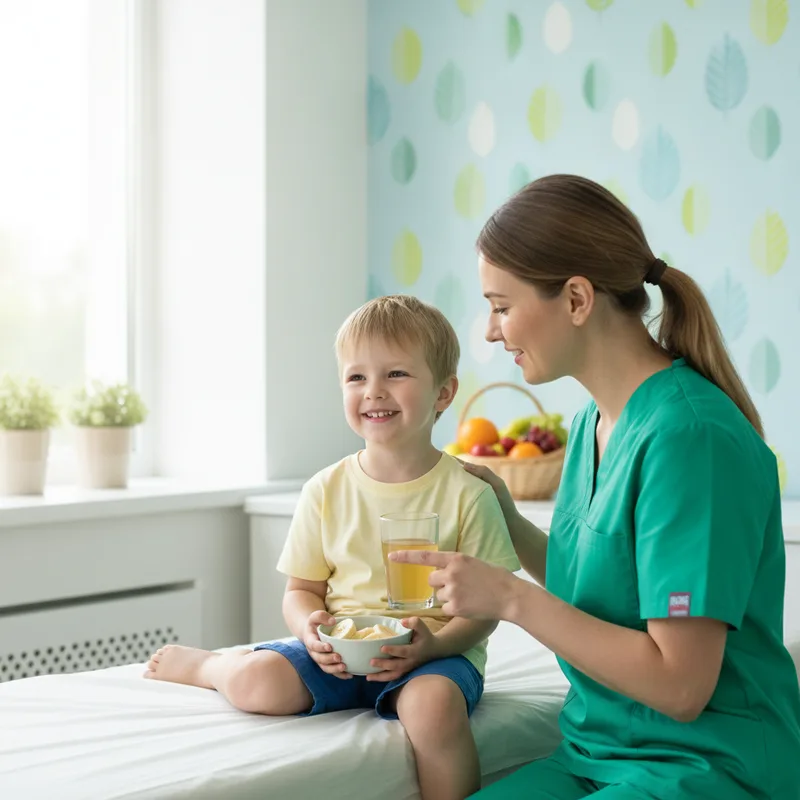
Your child ate too much at the party and now they are curled up on the couch holding their belly. Most of the time, an overfull stomach settles on its own within a few hours. What your child eats and drinks next, and what they skip, can make that wait a lot more comfortable. Here is a simple plan for the hours and day after a big meal.
First, give the stomach a rest
Right after overeating, the best "food" is usually no food at all. Let your child's appetite come back on its own before offering anything to eat. Do not push them to eat because it is mealtime.
- Offer small sips of water. Gulping a big glass can add to the full feeling, so small sips spread out are better.
- Keep them upright or propped up. Sitting, reclining on pillows or taking a slow walk around the house can ease pressure and heartburn. Lying flat right away often makes reflux worse.
- Loosen tight waistbands and let them rest somewhere quiet.
- Try a warm cloth or heating pad on low on the belly, with an adult checking that it is not too hot.
Gentle foods when hunger returns
When your child is ready to eat again, start with small portions of plain, easy-to-digest foods. Good choices include:
- Bananas, which are soft and easy on the stomach
- Plain white rice or plain pasta
- Applesauce without a lot of added sugar
- Toast, crackers or plain bread
- Oatmeal made with water or a little milk
- Baked or boiled potatoes without butter, cheese or sour cream
- Clear broth or a simple chicken and rice soup
- Plain yogurt, if dairy usually agrees with your child
- Plain cooked chicken or eggs once they are feeling better
These foods are meant to bridge a day or so, not to be a long-term diet. Once your child feels like themselves again, go back to their usual balanced meals with fruits, vegetables, whole grains and protein. If they had diarrhea, getting back to a normal diet soon actually helps the gut recover.
A word about ginger and peppermint
Many families reach for ginger or peppermint for an upset stomach. A small amount of real ginger in food may help some kids with mild nausea. Peppermint can relax the valve at the top of the stomach and may make heartburn worse, so skip it if your child has a burning feeling in the chest. Never add honey to tea or food for a baby under 1 year old.
Foods and drinks to skip for now
- Fried, greasy or very rich foods, which take longer to leave the stomach
- Spicy foods and acidic foods like tomato sauce or citrus, if your child has heartburn
- Soda and other fizzy drinks, which add gas and bloating
- Juice, sports drinks and sweets, since a lot of sugar can loosen stools
- Caffeine, including tea, coffee drinks and energy drinks, which children should avoid in general
- Large portions, even of gentle foods
Be careful with medicines
Most children do not need medicine after overeating. Check with your pediatrician or pharmacist before giving any stomach remedy, and ask them for the right product and dose for your child's age and weight. Do not give aspirin to children or teens, and avoid bismuth subsalicylate products such as Pepto-Bismol unless your pediatrician says it is okay, because they contain a cousin of aspirin.
Watch for dehydration if they vomit
If your child throws up, wait a little while and then offer very small, frequent sips of fluid. An oral rehydration solution from the drugstore is a good choice for repeated vomiting or diarrhea. Signs of dehydration include peeing much less than usual, a dry mouth, no tears when crying and unusual sleepiness. Learn more on MedlinePlus's dehydration page, and find everyday eating tips in the HealthyChildren.org nutrition section.
When to call us
Call your A thru Z Pediatrics office if your child's stomach pain lasts more than a day, keeps coming back after meals, comes with a fever, or if vomiting or diarrhea goes on for more than a day. Call right away if your baby is younger than 3 months and has a fever of 100.4°F or higher, or if a baby or toddler is vomiting and not keeping fluids down.
Call 911 or go to the nearest emergency room if your child has severe or worsening belly pain, pain that settles in the lower right side, a hard or swollen belly, green or bloody vomit, blood in the stool, or signs of serious dehydration such as no urine for many hours or being very hard to wake.
If you would like your child seen, request an appointment online.
This article is general information, not medical advice. If you have concerns about your child's health, call your A thru Z Pediatrics office.
Common questions
What should my child eat after overeating?
Once hunger returns, start with small portions of plain, easy-to-digest foods such as bananas, white rice, applesauce, toast, oatmeal or clear broth.
Should I give my child food right after they overeat?
Usually not. The best choice is often no food at all, so let the child's appetite come back on its own before offering anything.
What foods and drinks should my child avoid after overeating?
Skip fried, greasy or rich foods, soda and fizzy drinks, juice, sports drinks and sweets, caffeine, and large portions. Spicy and acidic foods should also be skipped if your child has heartburn.
Is it okay to lie down after eating too much?
Lying flat right away often makes reflux worse. Keeping your child upright, propped up on pillows, or taking a slow walk can ease pressure and heartburn.
Can I give my child medicine for an upset stomach from overeating?
Most children do not need medicine after overeating. Check with your pediatrician or pharmacist before giving any stomach remedy, and avoid aspirin and Pepto-Bismol unless your pediatrician approves.